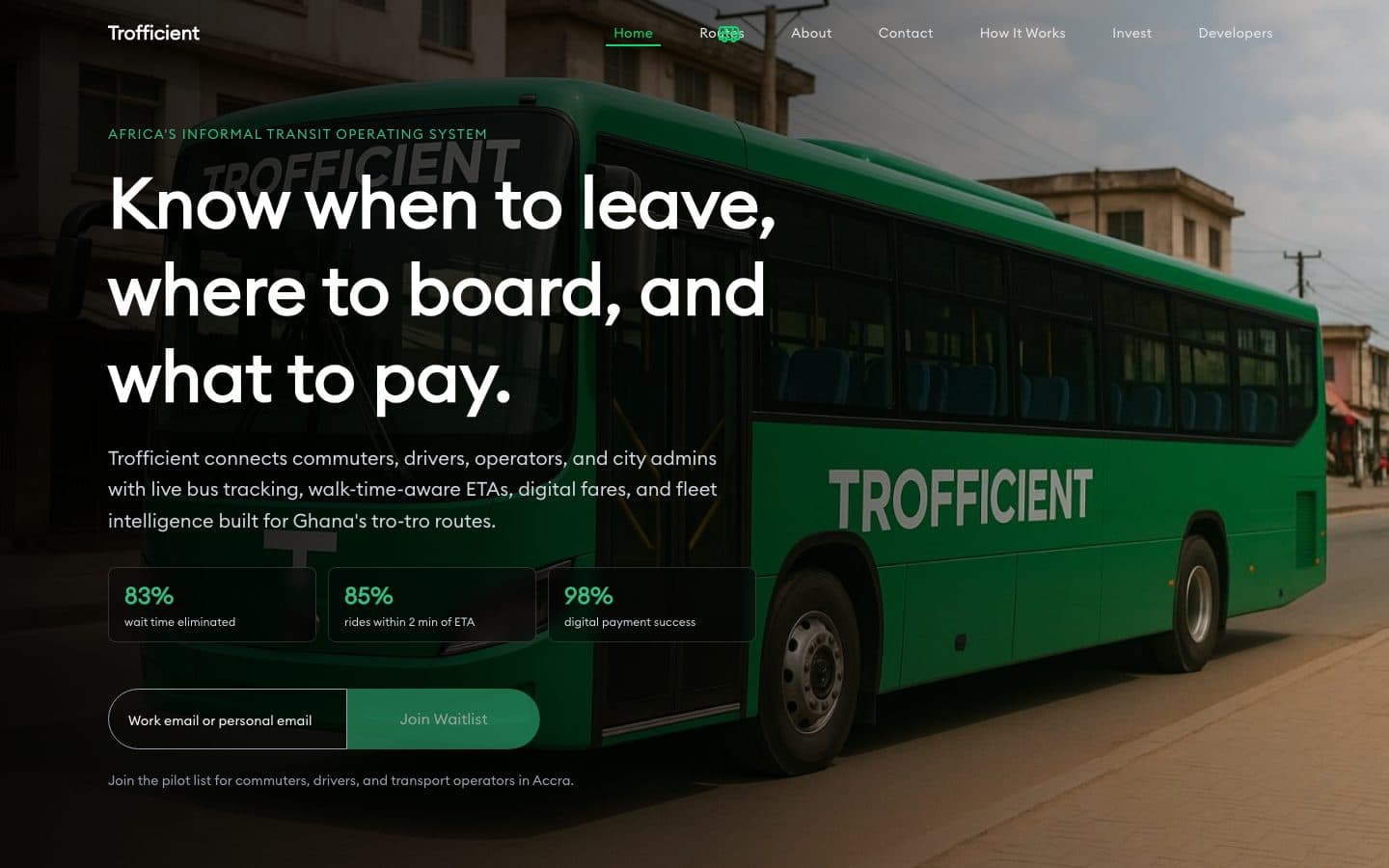
Trofficient
Transit technology for Ghana's informal trotro network: real-time vehicle tracking, dynamic pricing and mobile-money payments.
- Role
- Founder / Engineer
- Category
- Transit technology
- Year
- 2025—
- Status
- In development
Two apps, one ecosystem
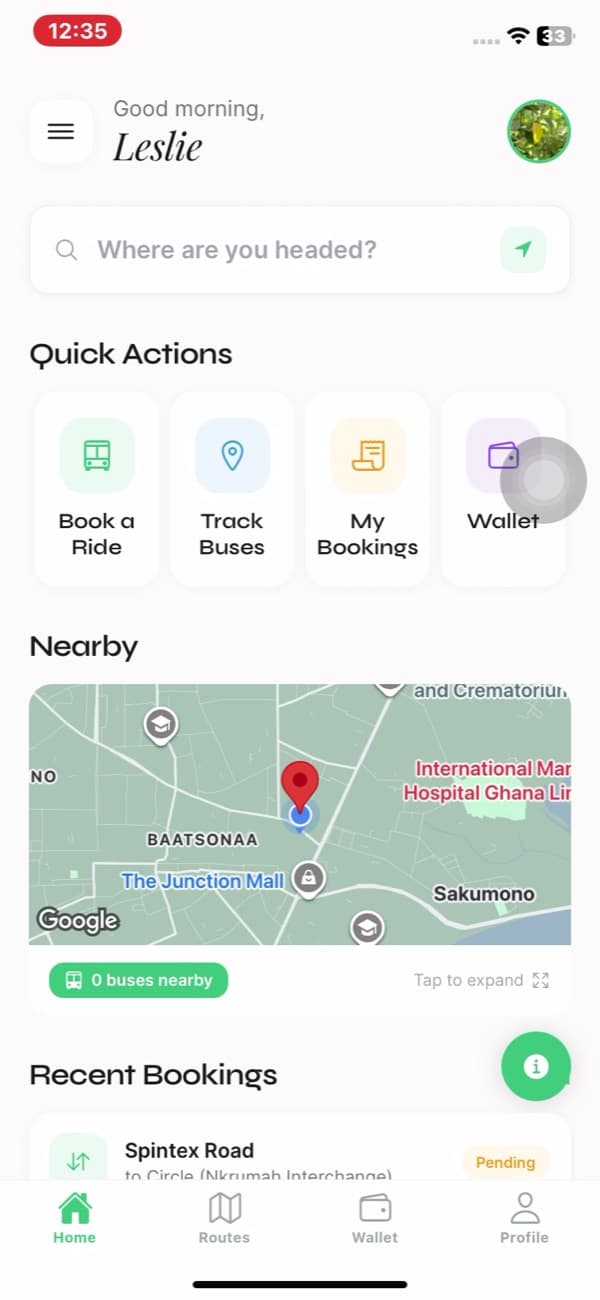
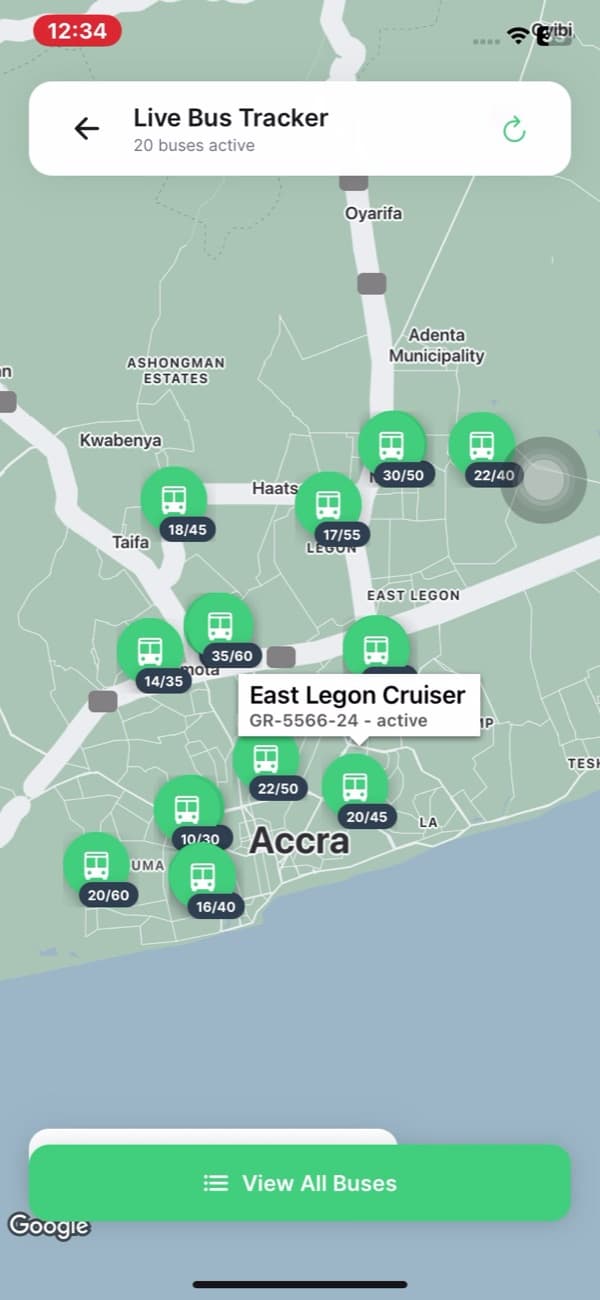
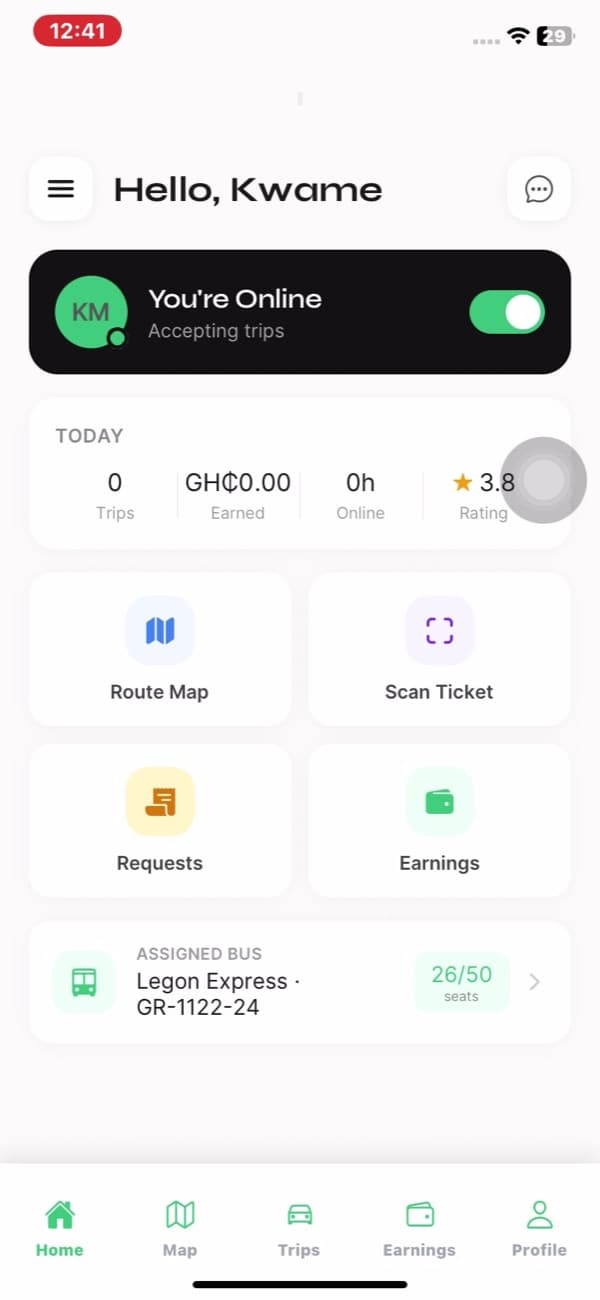
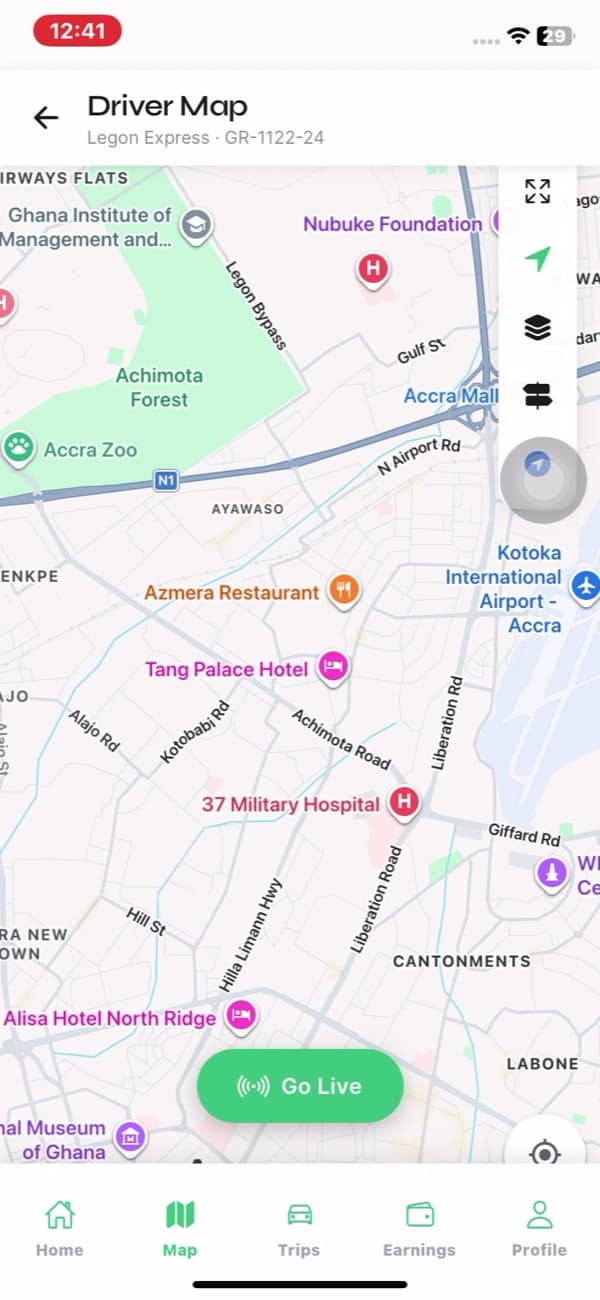
Trofficient is two mobile apps and the platform behind them. The rider app lets commuters watch buses move on a live map, see a route with its fare, book a seat and pay with Mobile Money. The driver app lets drivers go online, follow a route map, scan tickets and track earnings.
Context
Bus and shared-commuter transport in Ghana runs on a huge informal network. It works, but it is fragmented: riders can't predict a journey and operators can't see their own fleet.
Problem
How do you modernise a system that nobody centrally controls, without asking everyone in it to change how they already work?
Constraints
Mobile money over cards. Intermittent connectivity. Low-end devices. These aren't edge cases here. They are the market, and they are the reason the build stays disciplined.
Approach
One ecosystem with two sides: commuters plan predictable journeys, operators optimise routes, pricing and fleet usage. Live vehicle tracking is the thread that connects both.
My role
Founder. I design and build the product.
How it's built
- 01Rider appReact Native
- 02Live trackingWhere the vehicle is, right now
- 03Routing + pricingPredictable journeys, dynamic fares
- 04PaymentsMobile money
- 05Driver app + operatorsGo online, route map, scan tickets, earnings
Top: what the user touches. Bottom: what holds it up.
Key decisions
Mobile money first
Payments are designed around mobile money from day one rather than bolted on after a card-based flow.
Ship the executable MVP, then layer
A microservice plan was killed when a monolith shipped faster. Architecture serves delivery, not the reverse.
What I learned
Building for this market is a forcing function for discipline. If it survives bad connectivity and cheap phones, it survives everywhere else.
Stack
- React Native
- TypeScript
- Mobile money
Screens

Rider app
Home
Live bus tracker
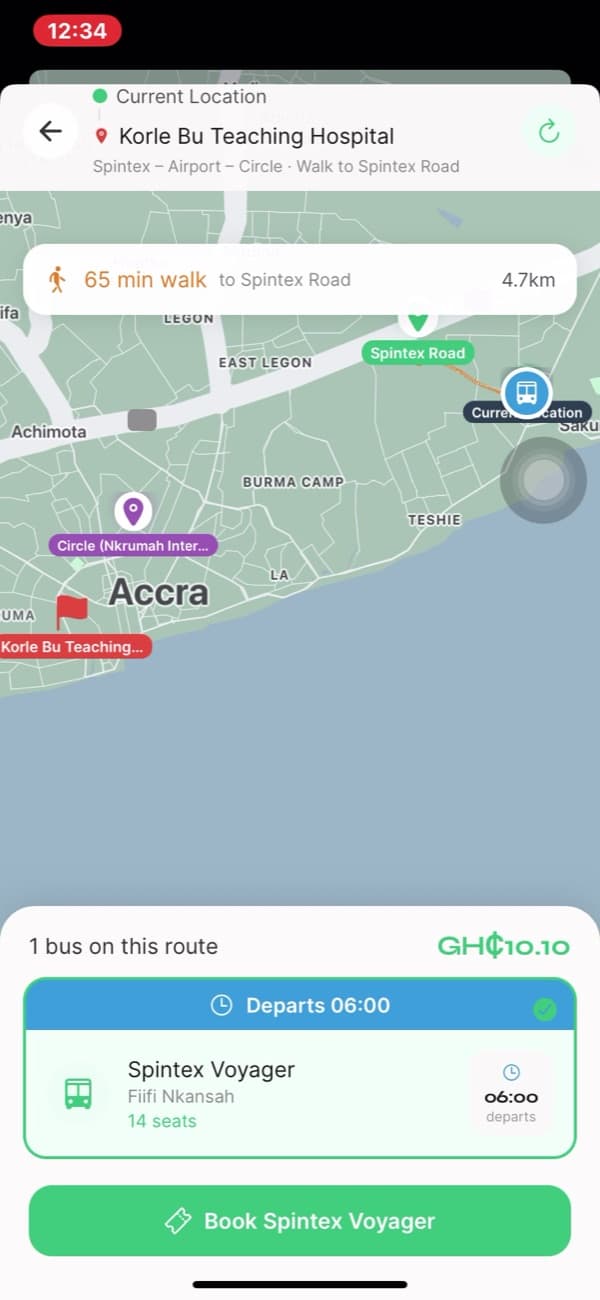
Route + fare
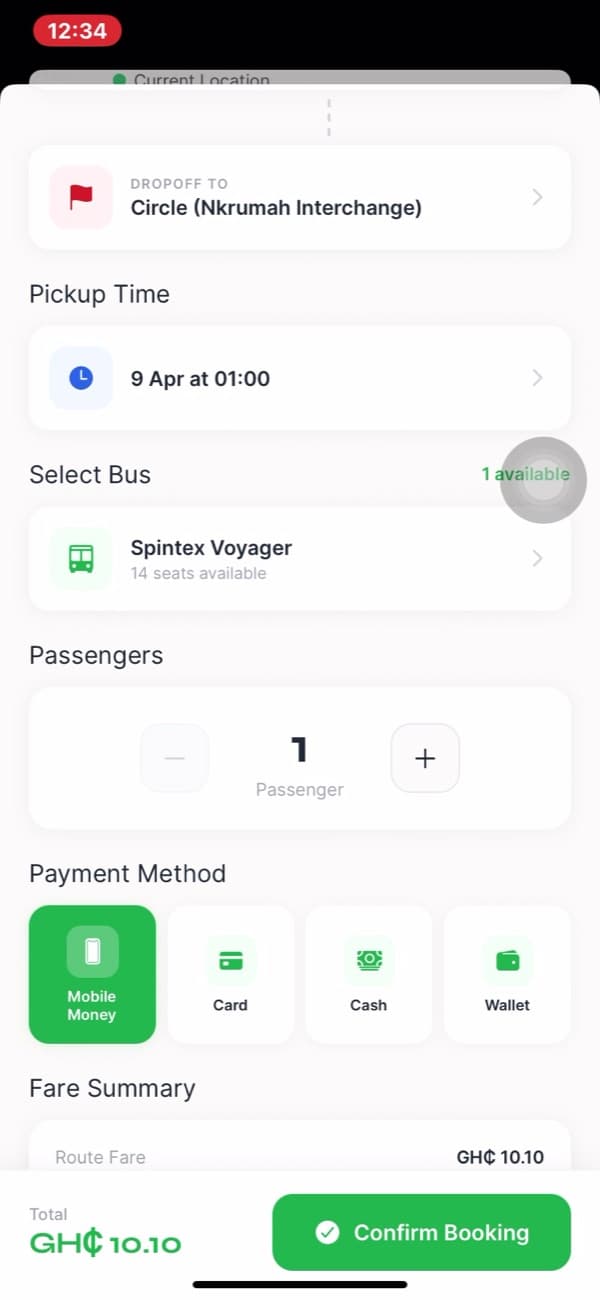
Booking + mobile money
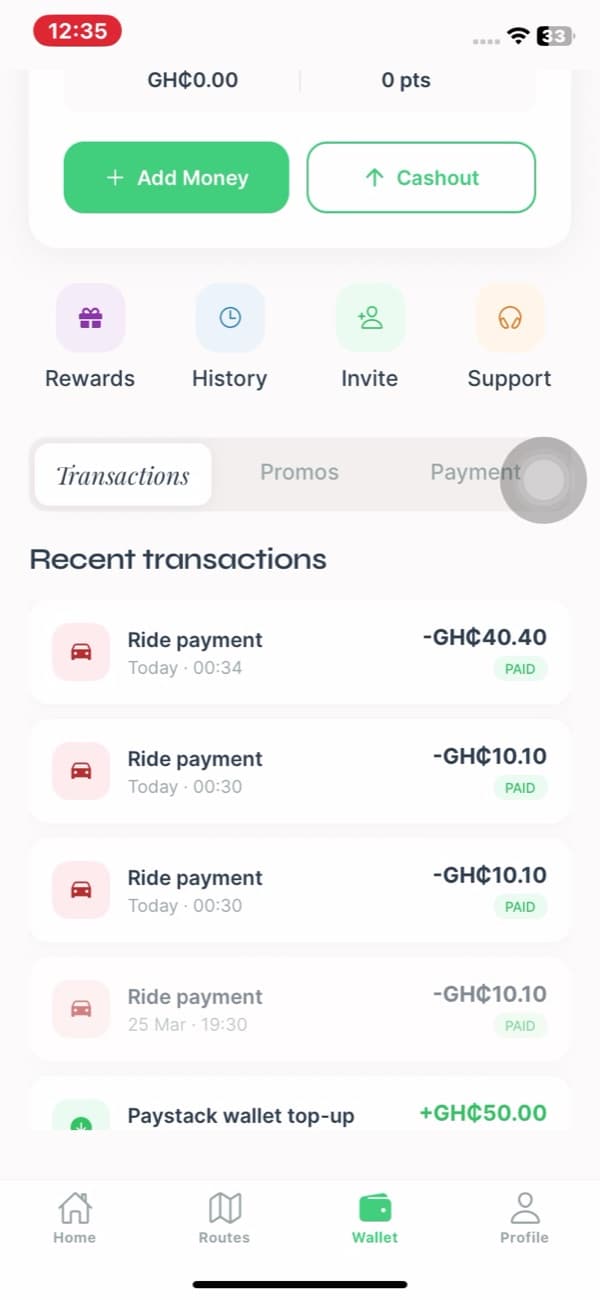
Wallet

Driver app
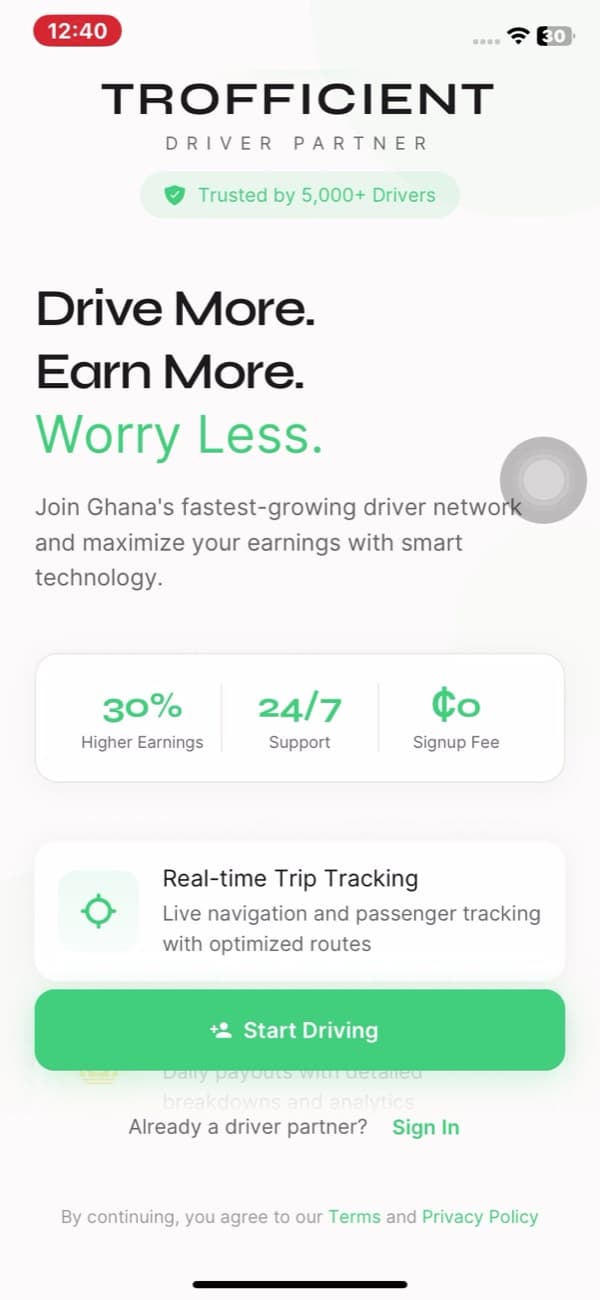
Driver sign-up
Home: go online
Driver map